
Garo Hills Electoral Shake-Up: Voting Age Cut to 18, Nomination Window Shortened Ahead of GHADC Polls.
Revised election rules for the Garo Hills Autonomous District Council now lower the voting age to 18 and shorten candidate nomination windows, potentially reshaping grassroots politics ahead of upcoming polls
 News Daily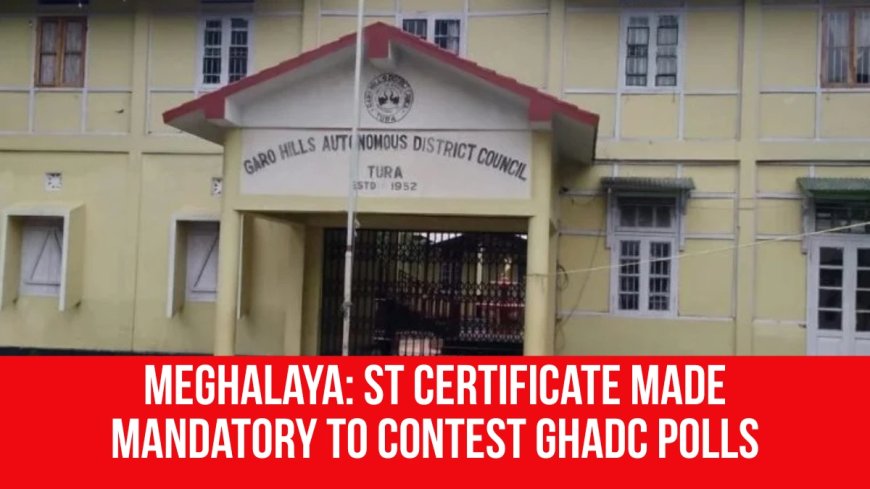
Tura, March 3, 2026:
In a landmark move set to redefine grassroots politics in western Meghalaya, the Garo Hills Autonomous District Council (GHADC) has approved sweeping changes to its electoral rules, lowering the voting age to 18 and compressing the nomination filing period for candidates. The reform, passed ahead of the upcoming council elections, is being hailed by supporters as a democratic milestone — while critics caution that tighter timelines could tilt the playing field.
The twin changes align district council voting norms with national and state elections and introduce procedural efficiency to the nomination process. With Garo Hills preparing for a high-stakes political contest, the reforms are expected to significantly alter campaign strategies, voter mobilization, and candidate selection.
Aligning With National Electoral Standards
One of the most consequential aspects of the reform is the reduction of the minimum voting age from 21 to 18. The decision brings GHADC elections in line with the voting age prescribed for Lok Sabha and Assembly polls following the 61st Constitutional Amendment of 1988.
Previously, thousands of young residents in Garo Hills who were eligible to vote in parliamentary and state elections were excluded from district council polls. This discrepancy often led to confusion and criticism from student bodies and youth organizations.
By harmonizing the age requirement, the council is expected to expand the electorate significantly across West Garo Hills, East Garo Hills, North Garo Hills, South Garo Hills, and South West Garo Hills districts.
Political analysts estimate that first-time voters could now constitute a decisive percentage of the electorate in several constituencies.
Shorter Nomination Period: Faster, But Fair?
The reform also shortens the nomination filing window for candidates. Election officials argue that the streamlined process will reduce administrative delays, lower logistical costs, and ensure quicker formation of the executive committee after elections.
Previously, extended nomination periods sometimes prolonged political uncertainty and delayed governance. The revised timeline is intended to improve efficiency and prevent procedural bottlenecks.
However, concerns have emerged that independent candidates and smaller regional outfits may find the compressed window challenging. Unlike established parties with ready organizational machinery, independent aspirants often rely on extended grassroots consultations and customary endorsements before filing nomination papers.
The Role of the GHADC in Tribal Governance
The Garo Hills Autonomous District Council operates under the Sixth Schedule of the Constitution, which grants autonomous district councils legislative and executive authority over land use, forest management (excluding reserved forests), customary laws, and local taxation.
The GHADC consists of elected and nominated members and wields considerable influence over traditional governance structures, land allotment decisions, and market regulation. Elections to the council often carry significant socio-economic implications for tribal communities.
As one of three autonomous councils in the state — alongside the Khasi Hills Autonomous District Council and the Jaintia Hills Autonomous District Council — the GHADC plays a central role in maintaining tribal autonomy while functioning within India’s federal framework.
Youth Vote: A New Political Force
Lowering the voting age to 18 is widely seen as the most transformative aspect of the reform.
Demographically, Meghalaya has a young population, with a significant percentage in the 18-25 age bracket. In Garo Hills, increasing access to higher education, digital connectivity, and social media engagement has created a politically aware generation.
The inclusion of younger voters is expected to shift campaign narratives toward issues such as:
·
Employment and entrepreneurship
·
·
Skill development initiatives
·
·
Drug abuse prevention
·
·
Sports and cultural infrastructure
·
·
Digital connectivity
·
Student unions and youth leaders have welcomed the reform, calling it a step toward inclusive governance.
“Young people are stakeholders in land policies, scholarship schemes, and employment programs overseen by the council. Their participation strengthens democracy,” said a college representative in Tura.
Political Parties Recalibrate Strategies
Major political parties active in Garo Hills include the National People's Party (NPP), the Indian National Congress, the Bharatiya Janata Party, and various regional parties and independent blocs.
Established parties are likely to benefit from the shortened nomination timeline due to their organized cadre systems and legal teams capable of swift documentation. Early candidate announcements and structured campaign machinery may become decisive advantages.
Independent candidates, who traditionally perform strongly in ADC elections, may need to accelerate their consultation processes and mobilize support more quickly than before.
Political observers suggest that the reforms could:
·
Encourage earlier political alliances
·
·
Increase party-centric campaigning
·
·
Reduce last-minute candidacies
·
·
Strengthen youth-focused outreach
·
Administrative Perspective
Election authorities maintain that procedural efficiency does not undermine democratic fairness. Officials note that nomination deadlines remain within reasonable limits and that awareness campaigns will be conducted to ensure all candidates understand the revised timeline.
The synchronization of electoral norms with national standards is also seen as enhancing legal clarity and reducing disputes.
Observers point out that prolonged election processes can disrupt administrative functioning, particularly in councils facing financial and governance challenges.
Broader Governance Implications
The reforms come at a time when discussions about strengthening autonomous district councils are gaining momentum across Meghalaya.
The Meghalaya Legislative Assembly has, in recent sessions, debated financial devolution and administrative reforms for ADCs. If the GHADC reforms prove effective, similar procedural updates may be considered for other councils.
Legal experts emphasize that the Sixth Schedule framework allows flexibility in adapting electoral practices, provided they align with constitutional safeguards.
Public Sentiment in Garo Hills
Reactions across the region have been mixed but largely optimistic.
In Tura and adjoining towns, youth groups have begun voter awareness initiatives, while civil society organizations are urging transparent implementation of the revised rules.
Community elders stress that while youth participation is welcome, respect for customary institutions and traditional leadership structures must remain central to council governance.