
Strawberry Festival 2026 Blossoms Across Meghalaya, Boosting Agritourism and Rural Economy.
The annual Strawberry Festival is celebrating the region’s agricultural heritage with live music, berry picking and local produce showcases — putting Meghalaya’s horticulture in the spotlight.
 News Daily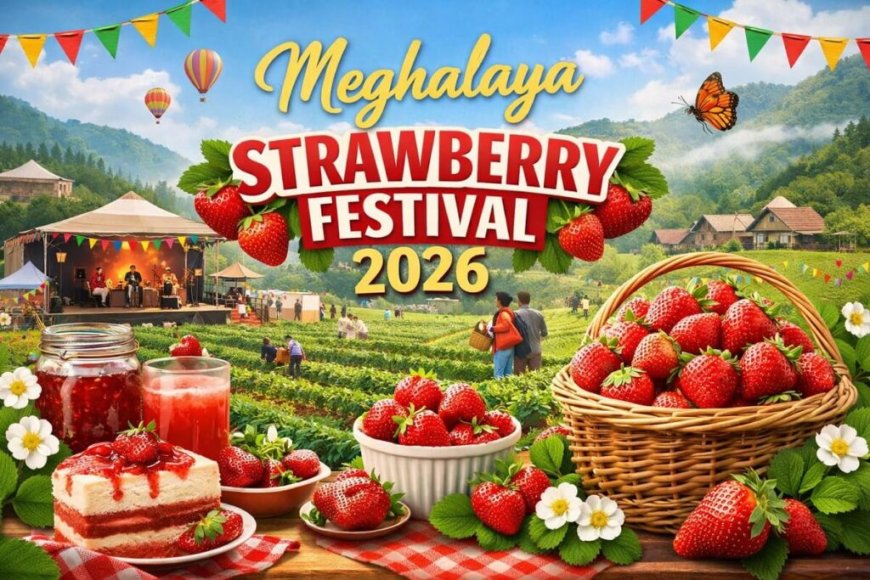
Shillong, March 3, 2026:
The rolling hills of Meghalaya have turned into vibrant shades of red as the much-awaited Strawberry Festival 2026 unfolds across key farming clusters in the state. What began as a small agricultural celebration has now evolved into a flagship agritourism event, drawing visitors from across the Northeast and beyond while placing Meghalaya firmly on India’s horticultural map.

Held across major cultivation hubs including Shillong, Sohliya, Smit, and Tura, the festival celebrates the peak strawberry harvest season with farm visits, live cultural performances, food exhibitions, and direct farmer-consumer interactions. The multi-location format reflects the government’s push to decentralize benefits and ensure that more rural communities participate in the economic gains.
A Decade of Strawberry Growth
Strawberry cultivation in Meghalaya has grown steadily over the past decade, particularly in Ri Bhoi and East Khasi Hills districts. The cool climate, fertile soil, and favorable winter conditions provide ideal growing environments for high-quality berries.
Farmers in Sohliya — now popularly known as the “Strawberry Village” of Meghalaya — were among the pioneers who introduced commercial strawberry farming with support from horticulture departments. Over the years, improved irrigation systems, organic farming practices, and cooperative marketing models have significantly increased productivity.
Today, thousands of farmers depend on seasonal strawberry cultivation as a key income source, with produce reaching markets in neighboring Assam and even metropolitan cities.
More Than a Festival: A Farm-to-Table Experience
Unlike conventional urban food fairs, Meghalaya’s Strawberry Festival places agriculture at the center. Visitors are welcomed directly into strawberry fields, where they can pick fresh fruit, learn about cultivation methods, and interact with growers.
Live demonstrations highlight modern techniques such as drip irrigation, mulching to conserve soil moisture, and eco-friendly pest control practices. Agricultural experts conduct knowledge-sharing sessions aimed at helping farmers adopt climate-resilient strategies.
The festival also serves as a marketplace where farmers sell fresh strawberries and value-added products including jams, preserves, juices, candies, and handcrafted wines. This direct-to-consumer model ensures better price realization for growers.
Agritourism Strengthening Rural Livelihoods
Tourism officials estimate a significant rise in footfall compared to previous years. Homestays in Sohliya and surrounding villages have reported high occupancy rates during festival weekends, reflecting the growing appeal of rural experiential tourism.
Local women’s self-help groups play a central role in organizing food stalls and selling processed strawberry products. For many families, the festival period generates earnings that supplement agricultural income for months.
“The Strawberry Festival is not just about celebration — it’s about rural empowerment,” said a senior official from the horticulture department. “It connects farmers to consumers, promotes entrepreneurship, and showcases Meghalaya’s agricultural potential.”
Cultural Celebrations Add Local Flavor
The event is equally a celebration of Meghalaya’s cultural heritage. Traditional Khasi and Garo dance performances, indigenous music shows, and folk storytelling sessions draw enthusiastic crowds.
Food stalls combine strawberries with local cuisine, offering innovative dishes such as strawberry-infused chutneys, desserts, and beverages. Handloom and handicraft exhibitions further highlight the creativity of rural artisans.
For visitors, the festival provides an immersive cultural experience — blending agriculture, tradition, and hospitality in one setting.
Government Backing and Development Vision
The Government of Meghalaya has consistently promoted horticulture as a pillar of rural economic diversification. Chief Minister Conrad Sangma has previously emphasized the importance of value-addition, branding, and improved market access for farmers.
Infrastructure improvements such as better road connectivity, cold storage facilities, and digital marketing support have strengthened the strawberry supply chain. Officials believe that with continued policy backing, Meghalaya could emerge as one of India’s leading strawberry producers.
There is also growing interest in expanding exports and introducing advanced packaging technologies to extend shelf life and reach premium markets.
Youth and Women Driving the Change
A notable feature of the strawberry boom is the participation of youth entrepreneurs and women farmers. Many young graduates have returned to their villages to explore agribusiness opportunities, integrating social media marketing and online sales platforms into traditional farming models.
Women’s cooperatives manage sorting, packaging, and processing operations, ensuring equitable distribution of profits within communities. The festival has become a symbol of inclusive growth, where agriculture serves as a vehicle for social transformation.
Addressing Challenges
Despite its success, the strawberry sector faces challenges including transportation costs and competition from major producing states like Maharashtra and Himachal Pradesh. Limited cold chain infrastructure remains a hurdle for long-distance distribution.
However, experts at the festival suggest that focusing on organic branding, niche marketing, and agritourism can help Meghalaya carve a distinct identity. Plans are underway to strengthen farmer training programs and encourage diversification into other temperate fruits.
Economic Impact and Future Outlook
Industry observers note that the Strawberry Festival has significantly boosted Meghalaya’s visibility as an agritourism destination. The integrated approach — combining agriculture, tourism, culture, and entrepreneurship — has created a sustainable ecosystem benefiting multiple stakeholders.
Organizers are exploring the possibility of expanding the festival to additional districts in coming years, along with introducing agritech exhibitions and farmer innovation awards.
If current trends continue, Meghalaya’s strawberry industry is expected to witness steady growth, contributing to rural income stability and broader economic development.
A Sweet Symbol of Progress
As families stroll through strawberry fields under clear hill skies, the Strawberry Festival 2026 reflects a larger narrative — one of resilience, innovation, and pride. It demonstrates how strategic crop diversification and community participation can transform rural economies.
In celebrating the harvest, Meghalaya is not only showcasing its produce but also cultivating a sustainable and inclusive future for its farming communities.