
Tourism Stakeholders Prepare for Spring Festival Surge in Shillong and Sohra.
As Shillong’s hotels fill up and Sohra’s waterfalls prepare to welcome larger crowds, Meghalaya stands poised for a vibrant and economically significant spring festival season—one that holds promise for businesses, communities, and visitors alike.
 News Daily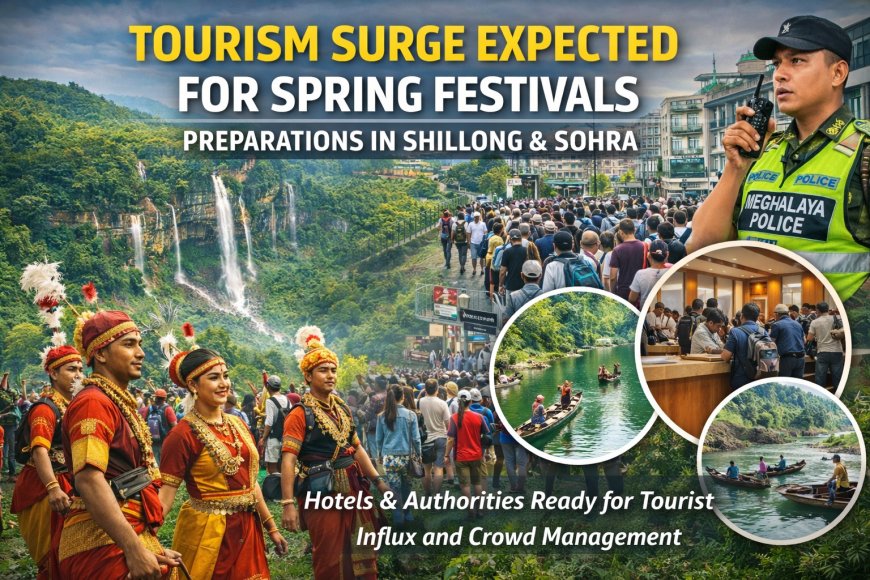
Authorities Step Up Crowd Management and Safety Measures as Bookings Rise
Shillong, February 27, 2026: Tourism stakeholders across Meghalaya are gearing up for a major surge in visitor arrivals as the spring festival season approaches. Hotels, homestays, tour operators, and transport providers in Shillong and Sohra have reported a sharp rise in advance bookings, prompting authorities to initiate crowd management and safety planning to ensure a smooth tourist experience.
With tourism playing a pivotal role in the state’s economy, the anticipated spring rush is being viewed as both an economic opportunity and an administrative challenge.
Occupancy Levels Climb Ahead of Peak Season
Hospitality associations in Shillong indicate that weekend occupancy rates for March and early April are already ranging between 75% and 90%, with several premium properties nearing full capacity on festival dates. Homestay operators in Sohra have also reported strong booking trends, particularly from domestic travelers seeking scenic getaways.
Tour operators confirm heightened demand for:
Day trips to Nohkalikai Falls and Mawsmai Caves
Living root bridge treks in East Khasi Hills
Dawki river excursions
Heritage and café tours within Shillong
Industry representatives say the early momentum signals continued recovery and growth in Meghalaya’s tourism sector.
Economic Boost for Local Communities
Tourism remains one of Meghalaya’s most significant employment generators. Beyond hotels and travel agencies, the sector supports:
Taxi operators and transport services
Street vendors and local markets
Artisans and handicraft sellers
Event organizers and cultural performers
Restaurants and cafés
Officials note that seasonal surges can inject substantial liquidity into local economies, particularly in rural and semi-urban areas where alternative industries are limited.
For communities in Sohra and surrounding villages, the spring season often represents a crucial income period that sustains households for months.
Authorities Activate Crowd Control Measures
With visitor numbers expected to increase substantially, district administrations have begun coordinating inter-departmental planning meetings involving tourism officials, Meghalaya Police, traffic authorities, and disaster response teams.
Planned measures include:
Additional police deployment at major tourist sites
Temporary traffic diversions in high-density zones
Designated parking areas near popular attractions
CCTV monitoring in central locations
Emergency medical response units at festival venues
Officials have stated that ensuring tourist safety while minimizing inconvenience to residents remains a top priority.
Shillong Faces Urban Congestion Concerns
As the gateway to Meghalaya’s tourism circuit, Shillong experiences significant traffic pressure during peak seasons. Popular locations such as Police Bazaar, Ward’s Lake, and Shillong Peak often see vehicle congestion during festival weekends.
Authorities are exploring temporary pedestrian zones and shuttle services to ease movement in core commercial areas. Traffic advisories are expected to be issued ahead of major event days.
Urban planners have also emphasized the need for long-term solutions to address recurring congestion challenges linked to tourism growth.
Sohra’s Delicate Balance Between Growth and Sustainability
In Sohra, tourism expansion has transformed the once rain-centric destination into a national eco-tourism hotspot. However, local leaders and environmental groups have raised concerns about:
Plastic waste accumulation
Overcrowding at waterfalls
Strain on water resources
Trail erosion near root bridges
To address these concerns, authorities are reportedly promoting responsible tourism guidelines, encouraging waste segregation, and coordinating with village councils to regulate visitor flow in ecologically sensitive zones.
Community leaders have reiterated that preserving natural heritage is essential for sustaining tourism in the long term.
Security and Emergency Preparedness
In addition to traffic and environmental management, law enforcement agencies are increasing vigilance during the high-traffic season. Police officials have outlined plans to:
Monitor unauthorized tour operations
Strengthen anti-theft patrols
Deploy rapid response units during large gatherings
Ensure coordination with health and fire departments
Given the state’s growing profile as a tourism destination, authorities are emphasizing proactive planning rather than reactive measures.
Post-Pandemic Recovery Gains Momentum
Industry stakeholders describe the anticipated surge as a strong indicator of sustained tourism recovery. Domestic travel demand has rebounded significantly over the past year, supported by improved road infrastructure and growing digital visibility of Meghalaya’s scenic landscapes.
Social media campaigns highlighting waterfalls, mist-covered hills, and cultural festivals have amplified interest among travelers from metropolitan cities.
Tour operators say short-haul weekend tourism and experiential travel packages are particularly driving growth in 2026.
Infrastructure Investments Supporting Growth
Improved highway connectivity and gradual expansion of airport services have enhanced accessibility to Meghalaya. While infrastructure capacity remains under pressure during peak seasons, officials maintain that ongoing upgrades will gradually ease logistical constraints.
Stakeholders stress that maintaining service quality amid rising demand will be critical to ensuring repeat tourism and long-term sustainability.
Optimism Tempered with Responsibility
Hoteliers and business owners express optimism about revenue prospects but acknowledge the need for disciplined management.
“Growth is welcome, but responsible tourism is the only way forward,” said a hospitality association representative in Shillong. “We must balance visitor comfort with environmental protection.”
Village councils in Sohra have also called for cooperation between tourists and locals to maintain cleanliness and respect community norms.