
U.S. Endorses Pakistan’s “Right to Self-Defense” Amid Escalating Border War With Afghanistan.
The U.S. endorsement of Pakistan’s “right to defend itself” marks a significant development in a rapidly evolving crisis. While framed within the language of international law and counterterrorism, the statement carries profound geopolitical weight.
 GlobalProspects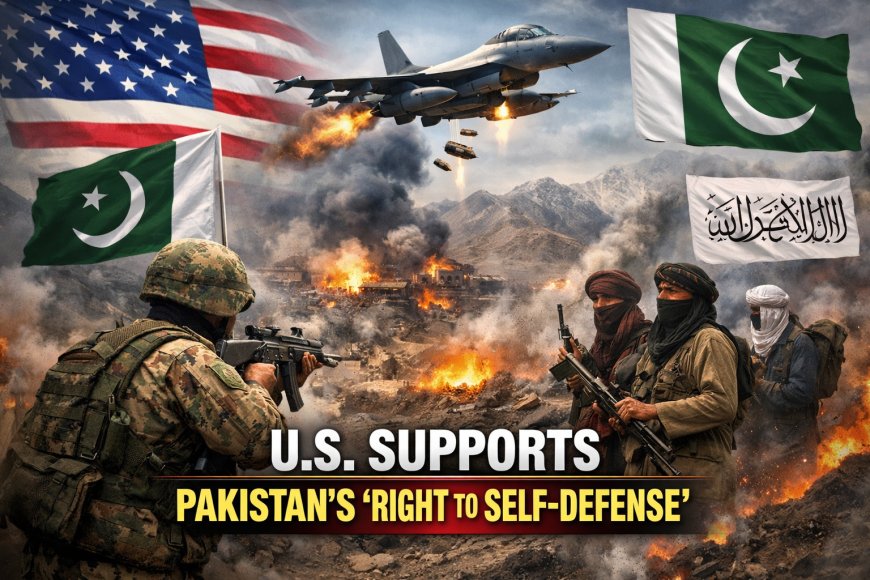
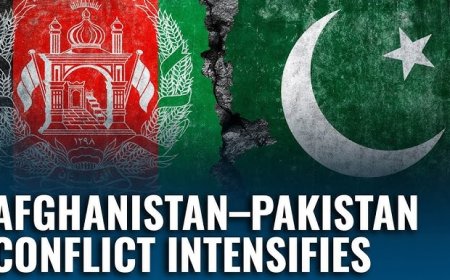
The United States has formally backed Pakistan’s “right to defend itself” following Islamabad’s cross-border airstrikes against militant targets inside Afghanistan — a move that has intensified diplomatic stakes in an already volatile regional conflict. The endorsement comes as fighting between Pakistani forces and Afghanistan’s Taliban authorities escalates along the disputed Durand Line, raising fears of prolonged instability in South Asia.
Washington’s statement, delivered by senior State Department officials, characterized Pakistan’s actions as legitimate self-defense against armed attacks attributed to the Tehreek-e-Taliban Pakistan (TTP). At the same time, U.S. officials urged restraint, civilian protection, and renewed diplomatic engagement to prevent a broader regional crisis.
The American position marks one of the clearest international alignments in the unfolding Pakistan–Afghanistan confrontation, reshaping the geopolitical narrative around the conflict.
The Escalation That Prompted U.S. Backing
Tensions surged after Pakistan conducted coordinated airstrikes targeting alleged TTP hideouts in multiple Afghan provinces, including areas near Kabul. Pakistani military officials described the strikes as “intelligence-based operations” aimed at dismantling militant infrastructure responsible for a sharp increase in attacks within Pakistan’s territory.
Afghanistan’s Taliban government condemned the strikes as violations of sovereignty, claiming civilian casualties and retaliating with artillery fire along border districts. Taliban spokespersons accused Islamabad of escalating tensions deliberately, while Pakistan countered that Kabul had failed to curb militant activities emanating from Afghan soil.
It was in this context that Washington stepped forward, framing Pakistan’s operations as defensive responses to cross-border terrorism.
Why Washington Chose This Position
The United States’ endorsement reflects strategic continuity in its post-2021 Afghanistan policy. Although American troops withdrew from Afghanistan nearly five years ago, U.S. counterterrorism objectives remain active through intelligence cooperation and regional partnerships.
Pakistan continues to play a crucial role in intelligence-sharing and counterterror operations. American officials have consistently voiced concerns about militant safe havens in Afghanistan, particularly those targeting neighboring states.
By supporting Pakistan’s right to self-defense, Washington signals that counterterrorism remains a central pillar of its South Asia strategy — even in the absence of direct military presence.
However, U.S. officials were careful to balance support with caution, emphasizing the importance of minimizing civilian harm and preventing a wider conflict that could destabilize the region.
The Legal Dimension: Self-Defense and Sovereignty
Under Article 51 of the United Nations Charter, states have the right to self-defense in response to armed attacks. The United States’ statement appears to align with the “unable or unwilling” doctrine — a controversial interpretation suggesting that if a host country cannot or will not prevent its territory from being used for attacks, the affected state may act in self-defense.
Pakistan argues that repeated TTP attacks on its soil justify such measures. Afghan authorities, however, reject this argument, insisting that cross-border airstrikes violate international law unless conducted with consent.
Legal scholars note that Washington’s support may set a precedent for how future cross-border counterterrorism operations are framed internationally.
Regional Power Calculations Shift
The U.S. endorsement reverberates far beyond Islamabad and Kabul.
China, a close strategic partner of Pakistan and a major investor in infrastructure projects under the China–Pakistan Economic Corridor (CPEC), has called for restraint but is keenly watching developments. Prolonged instability could threaten key connectivity initiatives.
Russia and Iran, both sharing regional security interests, have advocated dialogue and expressed concern about spillover instability into Central Asia.
India is closely monitoring the situation. While New Delhi has not publicly criticized Washington’s stance, strategic analysts note that U.S. backing of Pakistan in this context adds complexity to South Asia’s delicate balance of power. India’s long-standing concerns about cross-border militancy and regional instability mean that any prolonged conflict will factor into its security calculus.
For Northeast India in particular, broader regional instability can influence border management strategies, intelligence coordination, and regional security preparedness — especially given India’s connectivity ambitions linking the Northeast to Southeast Asia.
Counterterrorism Versus Escalation Risks
The TTP remains central to the dispute. The militant group has intensified attacks in Pakistan over the past year, targeting military convoys, police installations, and civilian centers. Islamabad maintains that Afghan authorities have not taken sufficient action against these elements.
Washington’s support underscores shared concerns over militant resurgence. However, security experts warn that open warfare between Pakistan and Afghanistan could paradoxically strengthen extremist networks by creating chaos and diverting coordinated counterterrorism efforts.
A prolonged military confrontation risks fragmenting regional security cooperation at a time when extremist threats remain fluid and transnational.
Humanitarian and Economic Concerns
Beyond the battlefield, humanitarian implications are mounting.
Reports from Afghan provinces suggest civilian displacement and infrastructure damage. Afghanistan’s fragile economy — heavily reliant on aid and informal trade — could suffer further setbacks. Pakistan, facing economic strain, must also consider the potential impact of refugee flows and heightened defense spending.
International aid organizations have urged all parties to protect civilians and ensure humanitarian access. The United States echoed these concerns in its statement, highlighting the importance of safeguarding noncombatants.
Global Diplomatic Stakes
Washington’s endorsement elevates the conflict from a bilateral confrontation to an issue with global diplomatic implications.
The United States’ position may influence how other Western allies respond. NATO members, though no longer militarily engaged in Afghanistan, remain invested in regional stability.
Meanwhile, Middle Eastern states with mediation experience — including Qatar and Saudi Arabia — could emerge as potential diplomatic facilitators. Whether Washington plays a behind-the-scenes role in encouraging talks remains to be seen.
The endorsement also signals to global partners that the United States continues to shape security narratives in South Asia, even as geopolitical focus expands to other theaters.
Prospects for De-Escalation
Despite heated rhetoric, analysts believe diplomatic pathways remain possible.
Back-channel communication between Islamabad and Kabul has historically prevented prolonged conflict. International pressure, particularly from major powers and regional stakeholders, may push both sides toward negotiation.
However, domestic political pressures complicate matters. Pakistan faces strong public demand for decisive action against militants. Afghanistan’s Taliban leadership, seeking to maintain internal legitimacy, cannot appear weak in the face of foreign strikes.
The trajectory of the conflict will depend on whether both sides prioritize immediate military objectives or longer-term regional stability.
A Turning Point for South Asia
The U.S. endorsement of Pakistan’s right to self-defense marks a pivotal moment in South Asia’s evolving security landscape. It reinforces counterterrorism partnerships while raising complex questions about sovereignty, escalation, and geopolitical alignment.
As cross-border tensions persist, the region stands at a crossroads. A contained response could stabilize the situation and re-open diplomatic channels. A prolonged confrontation, however, risks entrenching hostilities and destabilizing a region already shaped by decades of conflict.
For now, Washington’s backing underscores a clear message: counterterrorism cooperation remains central to its South Asia strategy — but the path to lasting stability will require far more than military action alone.