







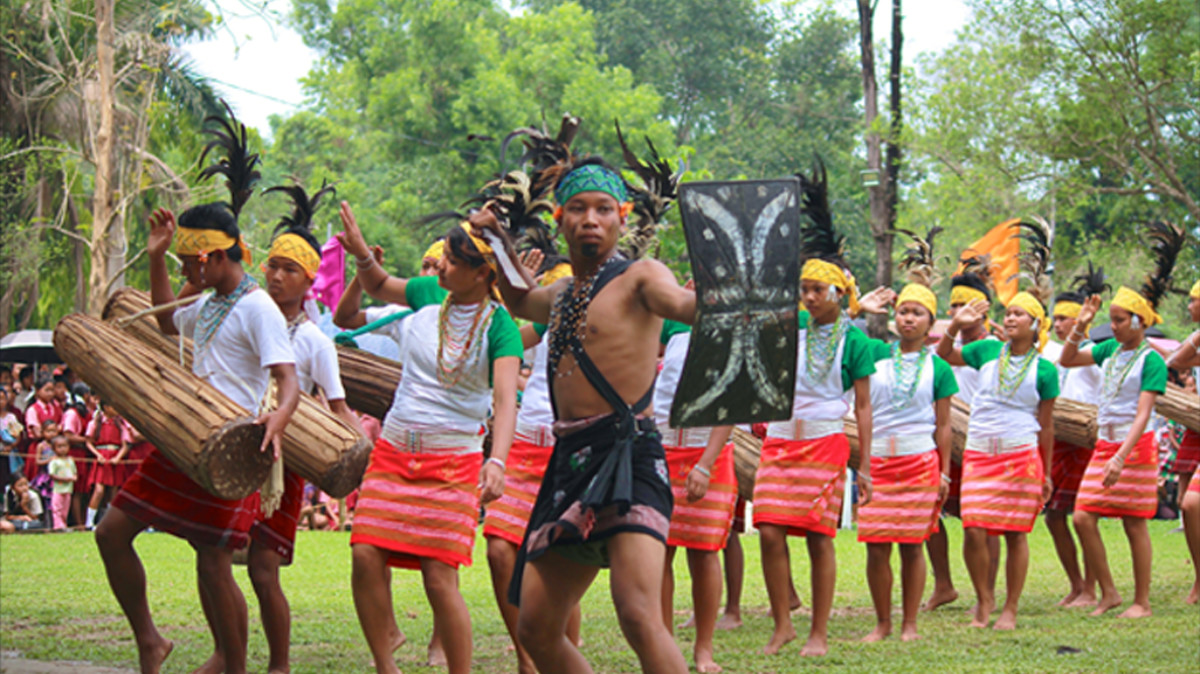
The Garo people, known as A·chik Mande ("hill people"), are one of the world's few surviving matrilineal societies, inhabiting the Garo Hills of Meghalaya, India, and neighboring regions of Bangladesh. With origins tracing back to Tibet approximately 400 BCE, this Tibeto-Burman ethnic group developed a unique social structure where lineage and inheritance pass through the mother's line.
Preserving the Soul of the Hills: My Journey into Garo History and Heritage
There are moments in life when you realize how little you truly know about the world around you. For me, that moment came on a misty morning in the Garo Hills, standing before a cluster of ancient stone tools that had lain undisturbed for over two thousand years. In that instant, I wasn't just a visitor—I was a witness to a story far older and far more profound than I had ever imagined.
This is the story of what I discovered about the Garo people, the A·chik Mande, and how their incredible journey through history has reshaped my understanding of resilience, identity, and the meaning of home.
The First Encounter: A Whisper from the Past
I had come to the Garo Hills of Meghalaya expecting beautiful landscapes and perhaps some interesting cultural experiences. What I found instead was a civilization whose roots reach back to the mist-shrouded plateaus of Tibet, circa 400 BCE. According to the oral traditions still whispered by elders in remote villages, the Garo ancestors began their great migration under a leader named Jappa Jalimpa, crossing the mighty Brahmaputra River and eventually finding sanctuary in these hills.
I remember sitting with an elderly man named Pa-Salgrink in a village called Dadenggiri. His weathered hands traced patterns in the air as he spoke of Tibotgre—the land of origin. "We are not just Garo," he told me, his eyes holding a depth I couldn't quite fathom. "We are A·chik. Hill people. The earth we walk on, the forests we tend, the rivers that give us life—they are not just resources. They are our ancestors. They are us."
His words stayed with me long after I left his village.
More Than a Matrilineal Society
One of the first things I learned about the Garo people is that they are one of the world's last remaining matrilineal societies. In a world where patriarchal systems dominate, the Garo trace descent, inheritance, and clan membership through the mother's line. The youngest daughter, called the nokmechik, inherits the family property and remains in the ancestral home to care for aging parents.
But here's what surprised me: matrilineal doesn't mean matriarchal.
I spent a fascinating afternoon with Dr. A. Marak, an anthropologist who has studied Garo society for over three decades. She explained that while women hold economic power through property ownership, men traditionally govern society and make key decisions. "It's a beautiful balance," she said. "Women have security, men have authority, and the family unit remains strong because both roles are valued."
The more I learned, the more I realized how Western frameworks of understanding gender simply don't apply here. The Garo have created something unique—a system that has sustained them for centuries.
The Nokpante: A Lost Institution
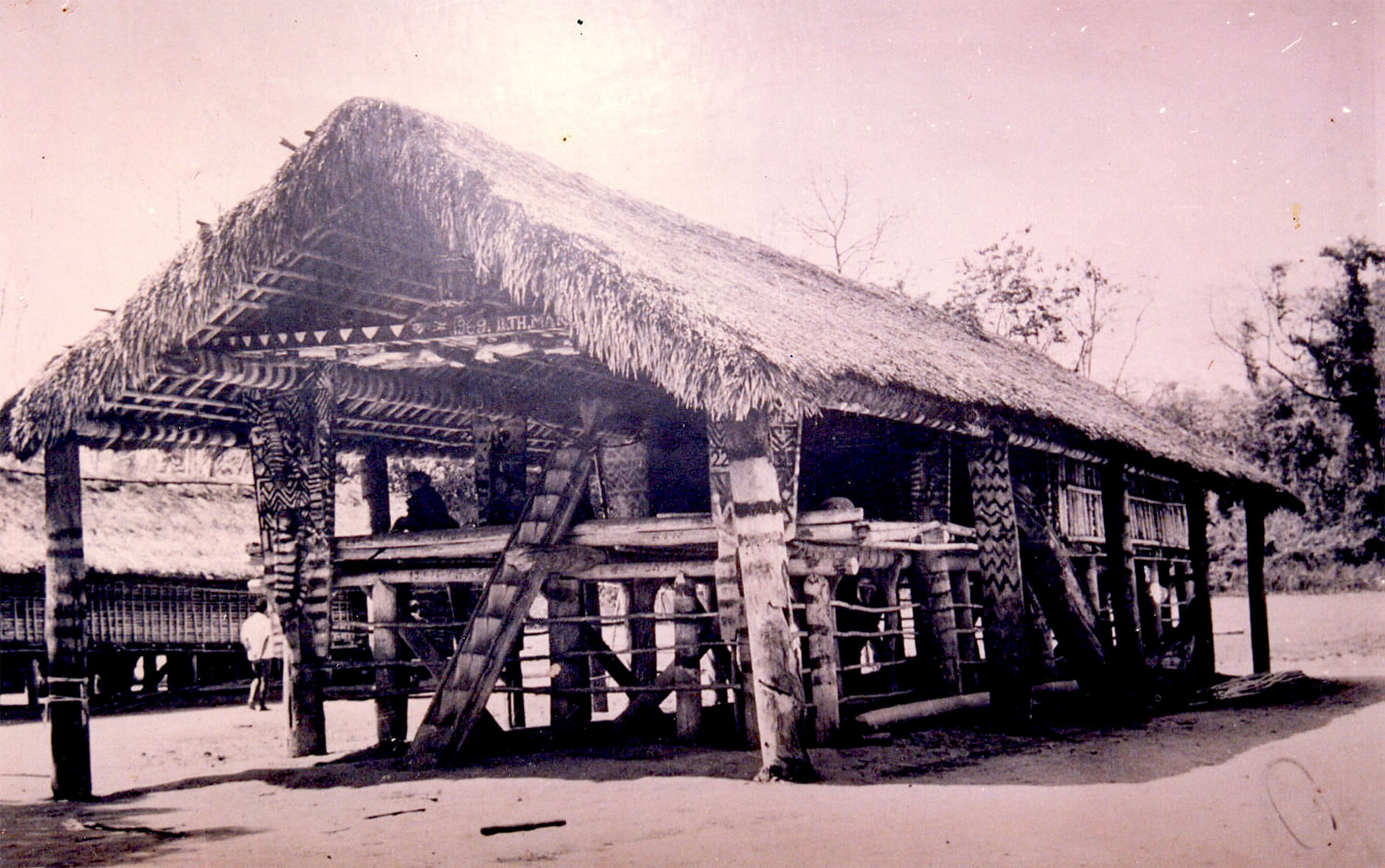
Perhaps the most fascinating aspect of traditional Garo society was the nokpante, or bachelor dormitory. Young men, upon reaching puberty, would leave their parents' homes and reside together in communal houses, typically built in the courtyard of the village chief. Here, they received training in agriculture, martial skills, traditional arts, and community leadership.
I found myself thinking about what modern society has lost in abandoning such institutions. Where do our young people learn the values of community, responsibility, and collective identity? Where do they develop the bonds that transcend the nuclear family?
The nokpante system declined with the arrival of Christian missionaries, who promoted nuclear family ideals. I don't mean to romanticize the past, but standing in the ruins of what was once a nokpante, I felt a pang of loss for something I had never even known existed.
The Headhunters: Rethinking Colonial Narratives
One of the things that troubled me most during my research was the colonial portrayal of the Garo as "fierce headhunters" and "bloodthirsty savages." British accounts from the late 18th and 19th centuries paint a picture of a brutal people who determined social status by the number of enemy heads they possessed.
But these accounts, I came to understand, were written from a particular perspective—that of colonial powers seeking to justify conquest and control. Yes, the Garo were warriors. Yes, they fiercely defended their territory against Mughal armies, local zamindars, and eventually the British. But to reduce their entire civilization to the practice of headhunting is to miss everything that makes them who they are.
In December 1872, when British battalions launched a coordinated attack on the Garo Hills, Garo warriors armed only with swords, spears, and shields faced rifles and mortars. The battle of Rongrenggre was tragically unequal. A young commander named Togan Nengminja fell fighting with what oral tradition describes as "unmatched heroism and courage."
Today, Togan Nengminja is remembered not as a "savage" but as a patriot, a freedom fighter who gave his life defending his people's sovereignty. The colonial narrative, I realized, says as much about the writer as it does about the written.
The Songsarek Way: A Faith Almost Lost
Before Christianity swept through the Garo Hills in the late 19th century, the Garo practiced an indigenous religion called Songsarek. It was an animist faith centered on a pantheon of deities—Tatara Rabuga, the Supreme God "so high that he cannot be reached"; Misi Saljong, the Sun God who watches over crops and fertility; Susime, the Goddess of Wealth; Rokkime, the Mother Goddess of Rice.
The numbers tell a stark story. In 1971, approximately 35 percent of Garo identified as Songsarek followers. By 2001, that number had dropped to 8 percent. By 2011, it was just 2 percent. Today, an estimated 90 percent of Garo people are Christian, primarily Baptist and Roman Catholic.
I visited a Songsarek village deep in the interior, where traditional practices continue largely untouched. An elderly priest, or kamal, allowed me to observe a ritual offering to Misi Saljong. The smoke from the incense, the rhythmic beating of drums, the quiet intensity of the participants—it was unlike anything I had ever witnessed.
"We are the last," he told me after the ceremony. "But we are not the end. Our children are learning. The old ways are not dead. They are sleeping."
In 2003, a group of concerned youths in Dadenggiri founded the Rishi Jilma organization to safeguard the Songsarek religion. Today, they work in approximately 500 villages across the Garo Hills, preserving rituals, festivals, and beliefs for future generations.
The Wangala: Hundred Drums Resounding
If there's one experience that captured the spirit of Garo culture for me, it was the Wangala festival—the "Hundred Drums Festival."
Originally a Songsarek harvest festival dedicated to Misi Saljong, Wangala has been embraced by Christians and traditional believers alike as a symbol of Garo cultural pride. I was fortunate enough to attend a celebration in the town of Tura, and the experience was nothing short of transcendent.
Hundreds of drummers, arranged in rows across an open field, began beating in unison as the sun rose over the hills. The sound was overwhelming—not just loud, but resonant, primal, as if the earth itself was vibrating in response. Women in handwoven skirts adorned with diamond patterns (said to represent the eye of Susime, the Goddess of Wealth) danced in graceful circles. Men in traditional headgear and warrior regalia moved with a controlled power that spoke to generations of martial tradition.
An elder explained the significance of the handprints I saw adorning doorways—three fingers dipped in rice flour, pressed against wooden frames. "It represents water levels," he said. "We ask for good harvest, for the right amount of rain. The handprint reminds us that we are connected to the earth, that our fate is tied to her generosity."
Wangala has become more than a festival. It is a declaration: We are Garo. We are here. We have not forgotten.
Across the Border: The Garo of Bangladesh
My exploration of Garo history took an unexpected turn when I learned about the significant Garo population in Bangladesh—approximately 200,000 people concentrated in the Mymensingh, Sherpur, Netrokona, and Sylhet districts.
Their story is different from their Indian counterparts. In Bangladesh, Garos face pressures toward assimilation into the majority Bengali Muslim culture. Traditional jumchas (jhum fields) are being abandoned for modern farming methods. Traditional materials like bamboo and clay are being replaced by plastic and polythene. Land insecurity threatens their ability to maintain their ancestral territories.
But they are not passive victims. Scholar Aaron Huq describes how Garo communities in both India and Bangladesh are "reinventing Garoness"—adapting traditional practices to modern contexts, creating new rituals that carry forward ancient values, and fighting for what philosopher Miranda Fricker calls "epistemic justice": the recognition that indigenous knowledge systems are valid, valuable, and worthy of respect.
I connected with a Garo activist in Sherpur via video call. She spoke passionately about documenting oral traditions, teaching the Garo language to children, and organizing cultural events that bring the community together. "They say we are disappearing," she told me. "They are wrong. We are transforming."
The Modern Crossroads
Today, the Garo people stand at a crossroads. The matrilineal system that defined their society for centuries is being transformed by economic shifts, modern education, and Christian values. The nokpante is gone. The Songsarek faith is diminished. Young people increasingly leave the hills for education and employment in India's cities, and some do not return.
And yet, there is hope.
I met young Garo artists who incorporate traditional patterns into contemporary fashion. I met filmmakers documenting oral histories before the elders who carry them pass away. I met educators who are developing Garo-language curricula to ensure that children grow up connected to their linguistic heritage.
Most inspiring was meeting a young woman, a software engineer who returned to her village after years in Bangalore. "Everyone asked me why I was coming back," she said with a laugh. "I told them: because this is where I belong. I can do my work from anywhere, but I can only be Garo here. In the city, I was just another Indian. Here, I am A·chik. I am somebody."
Lessons for Us All
As I prepare to leave the Garo Hills, I find myself reflecting on what this journey has taught me—not just about the Garo people, but about the nature of culture, identity, and change.
We live in an age of homogenization. Global brands, global media, global languages—they all push us toward sameness. And yet, here in these hills, a people who trace their origins to Tibet over two millennia ago continue to live according to principles that defy the dominant narratives of our time.
They have shown me that tradition and change are not opposites but partners. The Garo who celebrate Wangala with Christian hymns and traditional drumming are not abandoning their heritage—they are carrying it forward. The Rishi Jilma activists preserving Songsarek rituals are not resisting modernity—they are asserting that indigenous knowledge has value in the 21st century.
They have shown me that identity is not something you inherit passively but something you actively create. Every Garo who chooses to speak the language, wear the traditional attire, participate in the festivals, or teach the children is making a conscious choice to be Garo. It is an act of resistance, of love, of hope.
And perhaps most profoundly, they have shown me that the oldest things are not always found in museums. They are found in the words of elders, the rhythms of drums, the patterns on handwoven cloth, the quiet dignity of a people who have endured conquest, conversion, and marginalization and who are still here, still fighting, still thriving.
A Final Thought
On my last day in the Garo Hills, I returned to the place where I had seen those ancient stone tools—the Gawak Abri site, where archaeologists have found evidence of Neolithic habitation dating back 2,300 years. I sat on a rocky outcrop and watched the sun set over the hills, painting the sky in shades of orange and gold.
I thought about Jappa Jalimpa, leading his people from Tibet across the Brahmaputra. I thought about Togan Nengminja, falling with sword in hand against British rifles. I thought about the elders keeping Songsarek traditions alive, the activists organizing Wangala celebrations, the young people choosing to return.
The Garo people have been walking these hills for a very long time. They have faced challenges that would have destroyed lesser cultures. And they are still walking, still singing, still drumming, still remembering.
There is something in that—something about resilience, about continuity, about the stubborn refusal to disappear—that feels like a gift. Not just for the Garo, but for all of us trying to figure out who we are in a world that constantly tells us to be someone else.
I came to the Garo Hills looking for information. I am leaving with something far more valuable: a deeper understanding of what it means to belong, to endure, to carry forward the stories of those who came before, and to pass them on to those who will come after.
That is the oldest thing associated with the Garo people. And it is not in any museum.
If you enjoyed this post, please share it with someone who might be interested in learning about the incredible diversity of human cultures. And if you have your own experiences with indigenous communities or questions about Garo culture, I'd love to hear from you in the comments below.

Post a comment