
East Khasi Hills Clinches Overall Title at Inaugural Meghalaya State Thang-Ta Championship.
Athletes from East Khasi Hills emerged victorious at the maiden Meghalaya State Thang-Ta Championship, showcasing traditional martial arts prowess.
 News Daily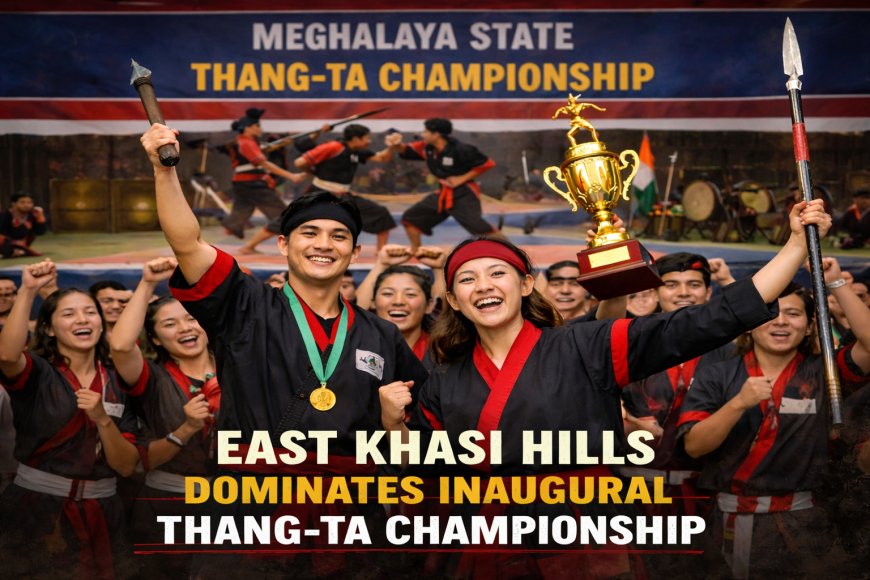
Shillong, March 3, 2026:
Athletes from East Khasi Hills delivered a commanding performance at the maiden Meghalaya State Thang-Ta Championship, emerging as overall champions in a tournament that marked a significant milestone for indigenous martial arts in the state. The championship, held in Shillong over the weekend, witnessed participation from multiple districts and showcased a vibrant blend of athletic precision and cultural heritage.
Organized by the Meghalaya Thang-Ta Association under the technical guidance of the Thang-Ta Federation of India, the event brought together junior and senior competitors in various weapon-based and unarmed categories. Officials described the championship as a foundational step toward institutionalizing Thang-Ta as a recognized competitive sport in Meghalaya.
A Strong Start for Indigenous Martial Arts
The inaugural edition carried historic weight. While Thang-Ta traces its origins to Manipur, the martial art has steadily gained practitioners across Northeast India. Meghalaya’s decision to host a structured state championship signals growing recognition of indigenous disciplines within formal sports frameworks.
Participants competed in sword (Thang) and spear (Ta) routines, synchronized team displays, and unarmed combat sequences. Judges assessed performances based on precision, control, balance, synchronization, and adherence to classical technique.
East Khasi Hills dominated across multiple categories, particularly excelling in individual weapon routines and group demonstrations. Their disciplined footwork, fluid transitions, and technical sharpness set them apart from other districts.
Youth Talent Takes Center Stage
One of the defining features of the championship was strong youth participation. Junior categories saw enthusiastic representation, reflecting a steady grassroots movement to introduce Thang-Ta in schools and community centers across Shillong and adjoining areas.
Coaches from East Khasi Hills attributed their success to structured training camps conducted over the past year. “We focused on consistency, discipline, and proper technique. The results today reflect the hard work of the athletes and their families,” a senior coach said after the medal ceremony.
Parents and spectators applauded the competitive spirit and sportsmanship displayed throughout the tournament. Many described the event as a positive alternative that blends physical fitness with cultural education.
Government Support and Institutional Backing
Officials from the Meghalaya Directorate of Sports and Youth Affairs attended the closing ceremony and expressed support for expanding indigenous sports infrastructure. Plans are reportedly under consideration to provide training grants, equipment support, and district-level coaching workshops to strengthen the discipline statewide.
Sports administrators emphasized that promoting traditional martial arts aligns with broader state objectives of preserving cultural heritage while offering structured sporting opportunities to youth.
“Indigenous sports form an integral part of our identity. By organizing such championships, we are not only identifying talent but also safeguarding tradition,” an official remarked.
Cultural Significance Beyond Competition
Thang-Ta is more than a competitive discipline; it is a centuries-old martial tradition rooted in philosophy, discipline, and respect. Historically practiced as a battlefield art, it evolved into a performance-based martial system combining agility, strength, and mental focus.
The championship featured brief cultural segments highlighting the historical evolution of the art form, reinforcing its heritage value.
Experts note that in an era dominated by global sports franchises, indigenous disciplines require structured platforms to survive and thrive. Meghalaya’s initiative is seen as a model for balancing tradition with modern sporting governance.
Safety and Professional Standards
Organizers ensured that all demonstrations adhered to standardized competition rules aligned with national federation guidelines. Safety protocols were strictly enforced, with trained referees supervising weapon-based events and medical teams stationed on-site.
Blunted and practice-grade weapons were used during competitive routines to maintain authenticity while minimizing injury risk.
The smooth conduct of the event drew praise from visiting technical officials, who described it as “a professionally managed debut tournament.”
Regional Integration and Future Prospects
Delegations from West Jaintia Hills, Ri-Bhoi, and other districts participated enthusiastically, signaling statewide acceptance of the discipline. Sports analysts believe that inter-district rivalries will intensify in future editions, raising competitive standards.
There is also growing optimism that Meghalaya athletes could soon represent the state at national championships under the Thang-Ta Federation of India banner.
If momentum continues, Shillong could emerge as a regional hub for indigenous martial arts competitions, attracting talent and spectators from across the Northeast.