
RSS Leader's Anti-Christian Remarks Spark Outrage.
RSS Leader's Anti-Christian Remarks Spark Outrage in Meghalaya.
 Publishers
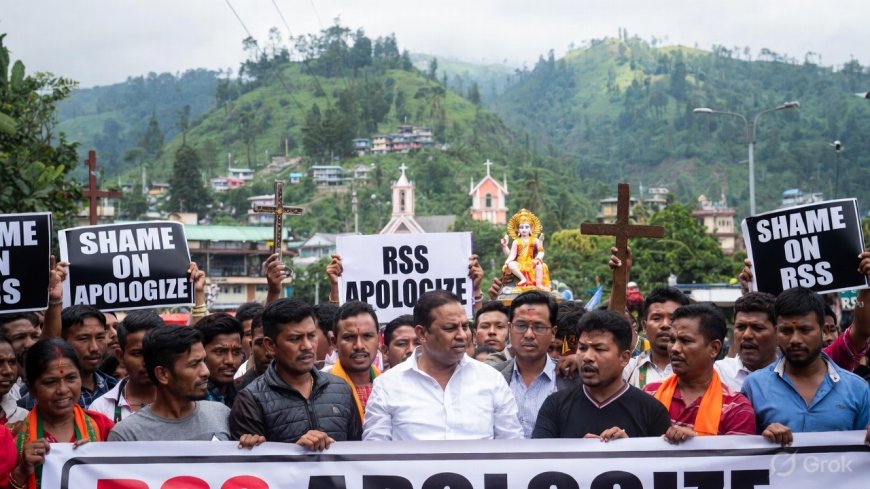
On February 26, 2026, the spotlight fell on Sunil Deodhar, a prominent Rashtriya Swayamsevak Sangh (RSS) member and Bharatiya Janata Party (BJP) leader, who issued an apology following backlash over inflammatory remarks targeting Christians during a public event. The incident, which unfolded at an Indigenous Faith Forum in Pynter village under the Pynursla subdivision, has not only stirred protests but also amplified discussions on the fragile balance of religious coexistence in this Christian-majority state. As Meghalaya grapples with its identity amid growing national political influences, this episode underscores the challenges of maintaining unity in a region where indigenous faiths, Christianity, and Hinduism intersect.
Deodhar's comments, captured in a viral video that he himself shared with pride, were delivered at a gathering ostensibly aimed at promoting indigenous Khasi traditions. According to reports, he referred to Jesus Christ derogatorily as "U Dkhar," a term in Khasi language that carries pejorative connotations for non-tribal outsiders, often implying disdain. He allegedly mocked Christian practices, the Bible, and accused the state government of favoring Christians while neglecting non-Christian communities. These statements were perceived as an attempt to stoke divisions between Christians—who form about 75% of Meghalaya's population—and adherents of indigenous faiths like the Seng Khasi. The video's rapid spread on social media platforms exacerbated the outrage, with many viewing it as a deliberate ploy to polarize the community along religious lines.
Sunil Deodhar is no stranger to controversy or to the Northeast's political landscape. A Maharashtrian by origin, Deodhar has been instrumental in expanding the RSS and BJP's footprint in the region since the early 2010s. He founded "My Home India," an organization focused on connecting Northeasterners with the rest of the country, but critics argue it serves as a vehicle for Hindutva ideology. Deodhar's past roles include serving as the BJP's national secretary and playing a key part in the party's electoral strategies in states like Andhra Pradesh and the Northeast. In Meghalaya, he has been associated with efforts to promote indigenous faiths, often framing them as aligned with Hindu traditions to counter what RSS affiliates see as "Christian dominance." His involvement in events like the Indigenous Faith Forum reflects a broader RSS strategy to engage with tribal communities, emphasizing cultural preservation while subtly critiquing missionary activities. However, this approach has frequently been accused of fostering anti-Christian sentiments, echoing historical tensions in the region.
The backlash was swift and multifaceted. The BJP's Meghalaya unit, aware of the potential electoral damage in a state where the party already struggles with an "anti-Christian" image, distanced itself immediately. Wankitbok Pohshna, the state BJP general secretary, penned a strongly worded letter to Deodhar, expressing "deep concern, immeasurable anguish, and utter disbelief" over the remarks. Pohshna urged an immediate retraction and public apology, emphasizing the need to uphold harmony and respect for all faiths. This internal rebuke highlights the BJP's precarious position in Meghalaya: despite alliances with regional parties like the National People's Party (NPP), the BJP holds only a handful of seats in the state assembly and must navigate sensitivities in a predominantly Christian electorate.
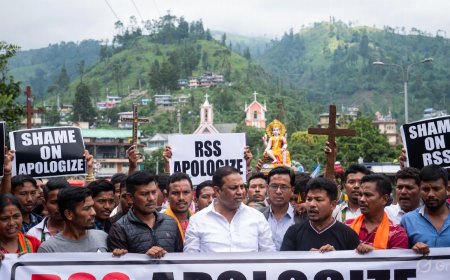
Christian organizations and civil society groups amplified the condemnation. The Khasi Jaintia Christian Leaders Forum, a prominent body representing churches in the region, voiced anguish over what they described as "continuing violence" against Christians, though in this case, it was verbal rather than physical. Protests erupted in Shillong and other parts of East Khasi Hills, with demonstrators demanding accountability. The Nationalist Congress Party (NCP) labeled the comments as "vague, baseless, and inflammatory," accusing Deodhar of aiming to provoke communal discord. Even members of the Seng Khasi community, whom the event purportedly represented, distanced themselves, stating that the remarks did not reflect their views on interfaith relations. Social media platforms, particularly X (formerly Twitter), buzzed with reactions, with posts from users like @pauliesgranddad condemning the incident as an RSS-BJP attempt to "divide and rule" in the Northeast.
Amid mounting pressure, Deodhar tendered his apology on February 25, 2026. In a statement circulated by the BJP Meghalaya unit, he expressed "immense respect for Lord Jesus Christ" and the Christian community, regretting if his words had hurt religious sentiments. He clarified that his intention was not to mock but to highlight perceived biases in government policies toward indigenous faiths. However, critics like Toki Blah, in a letter to The Shillong Times, dismissed this as hypocritical, pointing out the deliberate use of derogatory terms like "U Dkhar." Deodhar's apology was also reported in outlets like Deccan Herald, where it was noted that a police complaint had been filed against him for promoting enmity. While the apology quelled some immediate unrest, it has not fully extinguished the debate, with many questioning its sincerity.
This incident must be viewed against the broader socio-political canvas of Meghalaya. The state, formed in 1972, is a mosaic of ethnic groups including Khasis, Jaintias, and Garos, with Christianity introduced by missionaries in the 19th century. Today, Christians dominate demographically, but indigenous faiths persist, often syncretized with local customs. The RSS, through affiliates like the Janajati Dharma Sanskriti Suraksha Manch (JDSSM), has long pushed narratives that portray Christianity as a threat to tribal identities, advocating for the delisting of converted tribals from Scheduled Tribe (ST) status. In 2023, ahead of assembly polls in Nagaland and Meghalaya, JDSSM's demands sparked similar controversies, with the Meghalaya Pradesh Congress Committee condemning them as attacks on ethnic origins.
Historically, the BJP has faced an uphill battle in Meghalaya due to perceptions of being anti-Christian. In 2018, during assembly elections, viral messages and rallies highlighted fears of Hindutva encroachment, particularly in Garo Hills. Prime Minister Narendra Modi's visits and the party's emphasis on development have aimed to shake this image, but incidents like Deodhar's remarks reinforce suspicions. More recently, in January 2025, Education Minister Rakkam A Sangma's reference to Meghalaya as a "Christian state" while justifying Christian rituals for a university inauguration drew criticism from indigenous groups, illustrating the reverse side of religious tensions.
The controversy also ties into national security concerns in the Northeast, a region bordering Bangladesh, Myanmar, and China. Communal discord could exacerbate ethnic insurgencies or cross-border influences, where religious identities often overlap with separatist movements. For instance, the Legal Rights Observatory, linked to RSS ideologies, has been accused of harassing Christians through legal complaints, potentially fueling alienation. In Assam, similar campaigns by RSS affiliates to delist Christian tribals from ST lists have led to protests, exposing a wider agenda to "reclaim" tribal communities under Hindutva. In Meghalaya, such efforts risk undermining the state's social fabric, where interfaith marriages and shared festivals have long promoted unity.