
Water Supply Projects Accelerated Under Jal Jeevan Mission.
The accelerated implementation of water supply projects under the Jal Jeevan Mission marks a significant development milestone for Meghalaya. By expanding rural tap water connections and strengthening quality monitoring systems, the state aims to improve health outcomes, reduce gender burdens, and enhance overall quality of life in rural communities.
 Publishers
Shillong, February 26, 2026: The Public Health Engineering (PHE) Department has reported accelerated progress in rural household tap water coverage across Meghalaya under the Jal Jeevan Mission, with officials claiming significant improvements during the current quarter. The renewed push focuses on expanding Functional Household Tap Connections (FHTCs), strengthening water treatment systems, and improving last-mile delivery in remote villages.
Access to safe drinking water remains one of the state’s most pressing developmental priorities, particularly in hilly and geographically dispersed regions where communities have long depended on springs, streams, and community wells.
Quarter Sees Faster Execution
Senior PHE officials said multiple rural blocks recorded steady growth in new tap connections following streamlined fund releases and closer district-level monitoring. The acceleration reportedly includes faster pipeline laying, installation of storage reservoirs, and operationalization of newly constructed intake systems.
Departments have also intensified coordination with village-level water committees to ensure that newly installed connections are functional and sustainable. Officials noted that several habitations previously categorized as “partially covered” have now moved closer to full coverage status.
Focus on Remote and Interior Villages
A key focus this quarter has been extending water supply infrastructure to remote and interior settlements, particularly in districts such as West Garo Hills, Ri-Bhoi, and parts of East Khasi Hills. Many of these villages face seasonal water shortages and depend on manual collection from distant sources.
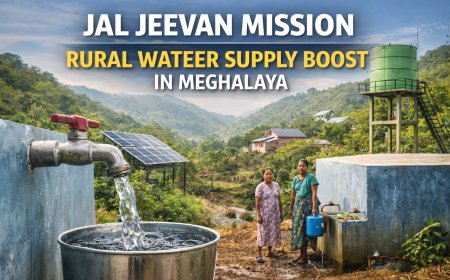
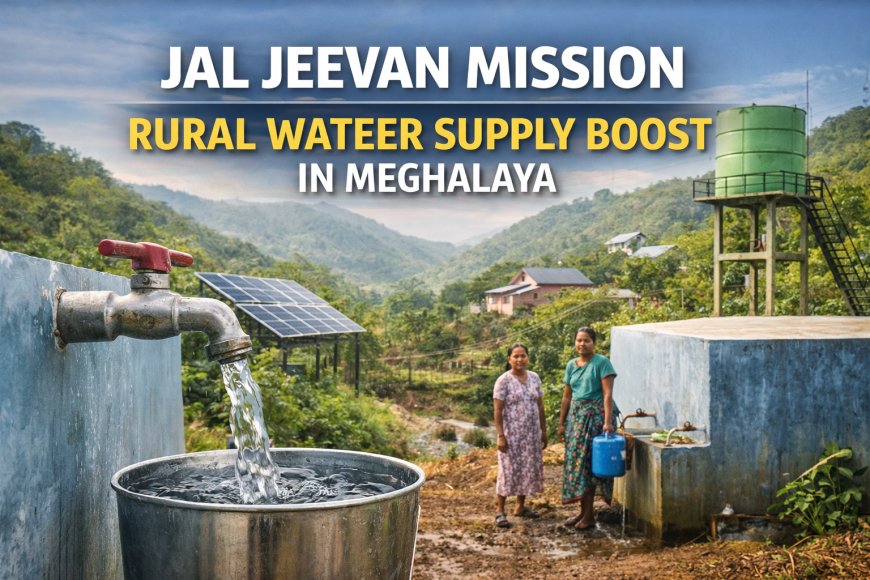
Engineering teams have deployed gravity-based water supply systems in areas with suitable elevation profiles, reducing reliance on electricity-dependent pumping. In off-grid areas, solar-powered pumps are being introduced to improve reliability and reduce operational costs.
Officials acknowledged that Meghalaya’s terrain poses logistical challenges, but emphasized that the mission’s design incorporates climate-resilient and terrain-sensitive engineering solutions.
Health and Sanitation Benefits
Health experts have long linked inadequate water access to waterborne illnesses in rural areas. Officials stated that expanded tap water access is expected to reduce dependency on untreated water sources, lowering the risk of contamination.
Improved water supply also supports sanitation and hygiene efforts in coordination with the Swachh Bharat Mission. Schools and anganwadi centres in newly covered villages are expected to benefit from improved water availability for hygiene and mid-day meal programs.
Relief for Women and Children
In many rural households, women and girls bear the responsibility of fetching water from distant springs or community taps. The introduction of household connections reduces daily travel time and physical strain.
Officials highlighted that access to tap water contributes to improved school attendance among girls and allows women to devote more time to livelihood activities. Community leaders in several villages have described the shift as transformative for household routines.
Strengthening Water Quality Monitoring
Alongside expanding connections, the PHE Department has increased water quality surveillance measures. District laboratories have reportedly intensified periodic testing, while field testing kits have been distributed to village committees.
Authorities emphasized that the mission is not limited to infrastructure installation but includes ensuring potable water standards. Regular monitoring of parameters such as turbidity and bacterial contamination remains part of the operational framework.
Financial and Administrative Measures
The Jal Jeevan Mission operates under a cost-sharing model between the Centre and the State, with northeastern states receiving enhanced central support. Officials credited timely fund releases and improved administrative coordination for the recent acceleration.
The state has also strengthened monitoring systems to track progress at block and district levels. Periodic review meetings aim to ensure that sanctioned projects move from approval to execution without prolonged delays.
Sustainability and Environmental Concerns
Ensuring sustainable water sources remains a central challenge. Authorities are reportedly investing in spring rejuvenation projects, rainwater harvesting integration, and catchment protection to maintain long-term supply stability.
Meghalaya’s heavy rainfall provides abundant seasonal water, but dry months can expose vulnerabilities in source reliability. Officials said environmental safeguards are being integrated into project design to balance extraction with ecological preservation.
Challenges Remain
Despite reported progress, several implementation hurdles persist:
- Difficult terrain increases infrastructure costs
- Dispersed settlements complicate network planning.
- Maintenance capacity at village level requires strengthening.
- Monsoon-related damage poses risks to pipelines and intake systems.
Officials acknowledged these challenges but maintained that targeted interventions and community participation are helping address them.
Public and Political Attention
The acceleration of water supply projects has drawn significant public attention, particularly in rural constituencies where water access remains a daily concern. Access to drinking water is widely regarded as a core development benchmark.
Government representatives described the progress as part of a sustained commitment rather than a short-term drive. However, with local governance discussions gaining momentum, infrastructure delivery continues to shape public perception of administrative performance.
Toward Universal Rural Coverage
Meghalaya’s goal under the Jal Jeevan Mission is universal rural tap water coverage with assured functionality. Officials said upcoming phases will prioritize:
- Completion of pending connections
- Ensuring 24/7 operational reliability
- Strengthening community-based maintenance models
- Enhancing digital monitoring dashboards
The state’s performance in sustaining functional connections will be critical in determining long-term success.