







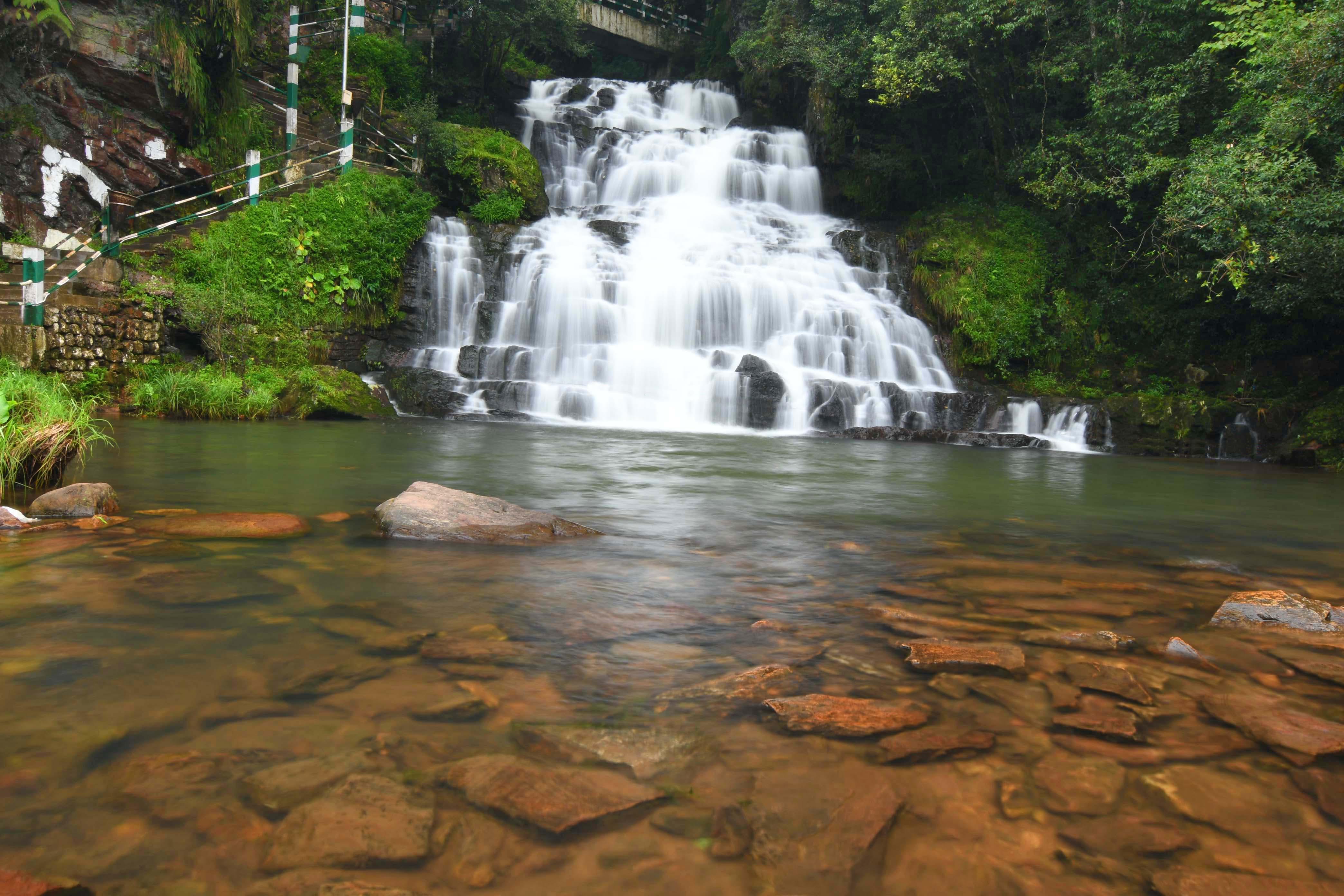
Discover Elephant Falls in Shillong, Meghalaya—a mystical three-tier waterfall steeped in colonial history, Khasi folklore, and natural beauty. Explore legends, travel tips, and hidden stories.
Tucked within the misty hills just outside Shillong lies one of Meghalaya’s most enchanting natural wonders—Elephant Falls.
At first glance, it is a simple cascade—a three-tiered waterfall flowing gracefully through moss-covered rocks and dense greenery. But linger a little longer, and you’ll begin to sense something deeper. The air feels heavier with memory, the sound of water more like a whisper than a roar.
Elephant Falls is not merely a place—it is a story waiting to be heard.
The Lost Stone Elephant: A Colonial Echo
The name “Elephant Falls” itself carries a tale of loss and transformation.
During the British colonial era, a massive rock formation near the waterfall resembled an elephant. Captivated by this natural sculpture, British officers named the site Elephant Falls. However, in 1897, a devastating earthquake struck the region, shattering the rock into fragments.
What remains today is not the elephant, but its memory—etched into the name and preserved in stories passed down through generations.
Interestingly, the local Khasi name for the falls is Ka Kshaid Lai Pateng Khohsiew, meaning “The Three-Step Waterfall.” Unlike the colonial name, it reflects the waterfall’s natural form rather than an imposed image.
This dual identity—one born of nature, the other of history—makes Elephant Falls a symbol of Shillong’s layered past.

A Waterfall Blessed by Spirits
Long before colonial visitors arrived, the Khasi people believed that waterfalls like Elephant Falls were sacred.
According to local folklore, the cascading waters are inhabited by protective spirits. These spirits, known to guard forests and rivers, ensure the balance of nature. Disturbing such places—through disrespect or harm—was believed to invite misfortune.
Even today, elders advise visitors to approach the falls with humility. Loud noise, littering, or careless behavior is frowned upon—not just as a matter of etiquette, but as a sign of respect toward the unseen guardians of the land.
On misty mornings, when fog wraps around the falls and the forest falls silent, many locals say you can feel the presence of these spirits.



Post a comment