







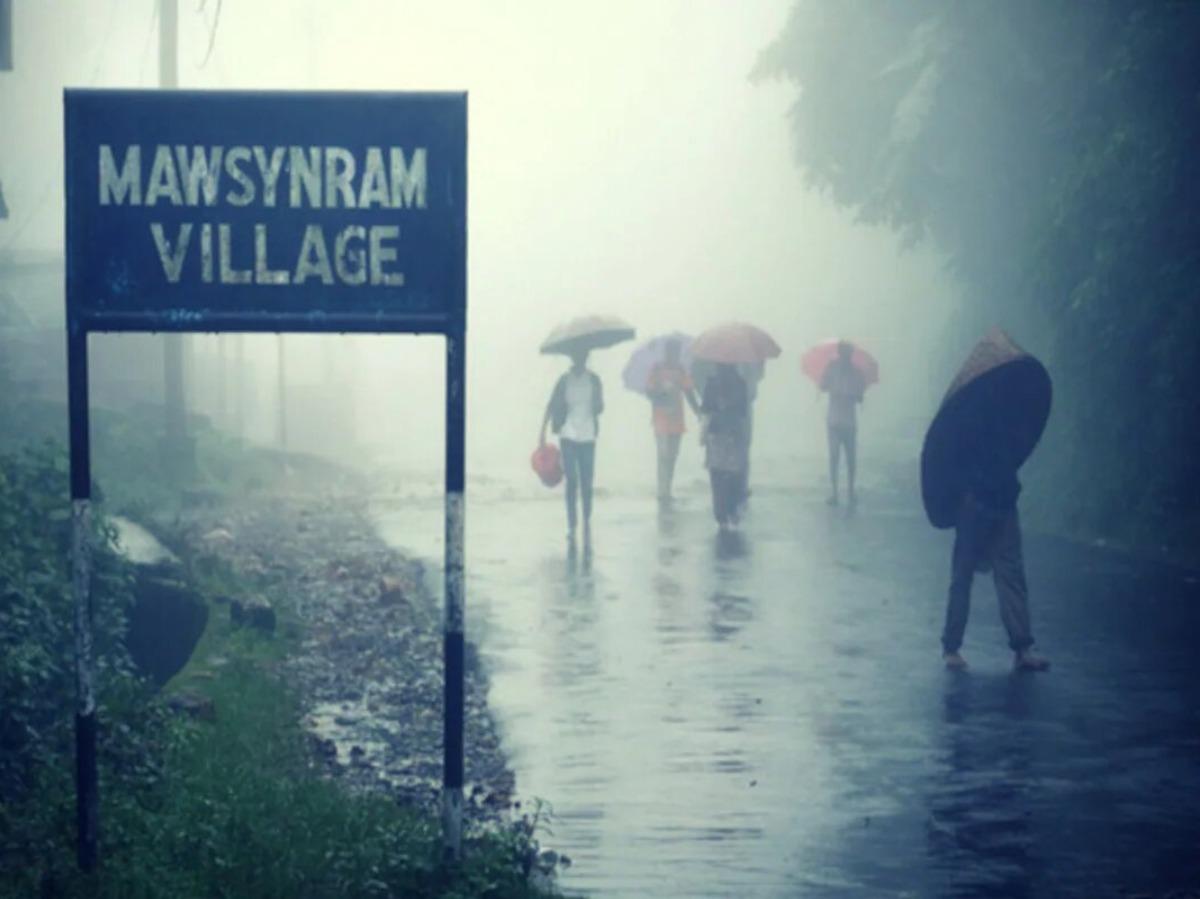
Discover Mawsynram, the wettest place on Earth, through its myths, sacred caves, Khasi traditions, and breathtaking landscapes in Meghalaya.
Hidden deep within the East Khasi Hills of Meghalaya lies Mawsynram, a place where rain is not just weather—it is identity, spirit, and story.
Recognized as the wettest place on Earth, Mawsynram receives an astonishing amount of rainfall every year. But beyond meteorological records lies a deeper truth: this is a land shaped as much by myth as by monsoon.
Here, the clouds do not merely pass—they linger, whispering ancient secrets across the hills. The rain does not fall—it speaks.
The Legend of the Endless Rain
Long before Mawsynram was crowned the wettest place on Earth, the Khasi people believed its rainfall was a divine phenomenon.
According to local folklore, the region was once chosen by celestial beings as their earthly abode. These spirits, known to control the elements, blessed the land with abundant rain to ensure fertility and prosperity.
But there is another side to the story.
When humans forgot their sacred duty to respect nature, the spirits grew restless. The gentle rains turned into relentless downpours—a reminder that nature’s balance must never be broken.
Even today, elders say the thunder is not just sound—it is the voice of the heavens echoing through the hills.
Mawjymbuin Cave: The Sacred Heart of Mawsynram

At the spiritual core of Mawsynram lies the revered Mawjymbuin Cave, a place where geology and mythology intertwine.
Inside the cave stands a naturally formed stalagmite, widely believed to resemble a Shivling, symbolizing Lord Shiva. For many, this is not merely a rock formation—it is divine manifestation.
Local legends say that the cave was once a meditation site for ancient sages who sought enlightenment in its silent depths. During certain times of the year, a beam of sunlight enters the cave, illuminating the formation—an event considered sacred by devotees.
Visitors often describe an overwhelming sense of calm inside, as if the cave itself breathes with quiet divinity.
Life Under the Heaviest Skies

Living in Mawsynram means living in harmony with rain.
The Khasi people have adapted beautifully to this unique environment. Traditional homes are designed to withstand heavy rainfall, and locals often use bamboo rain shields, known as knups, to navigate through downpours.
But beyond practicality lies philosophy.
For the people of Mawsynram, rain is not an inconvenience—it is a blessing, a teacher, and a constant companion. It nurtures the land, sustains life, and connects them to their ancestors.
Nature as a Living Deity
In Mawsynram, nature is not separate from spirituality—it is spirituality.
-
Hills are believed to be ancient guardians
-
Forests are sacred spaces inhabited by spirits
-
Water is revered as a life-giving force
This belief system ensures that the environment is protected with deep respect. Exploitation is avoided, and conservation is practiced as a way of life rather than a policy.
It is perhaps this reverence that keeps Mawsynram pristine despite its global recognition.


Post a comment